
Endoscopic Spine Surgery
A minimally invasive technique that may be used for selected conditions affecting spinal discs, nerves, and the spinal canal. A small camera helps the surgeon view the treatment area through a focused surgical corridor. This specialized approach minimizes tissue damage, leading to potentially less post-operative pain and a faster return to daily activities compared to traditional open surgery. Each patient is carefully evaluated to determine if endoscopic treatment aligns with their specific pathology and recovery goals.
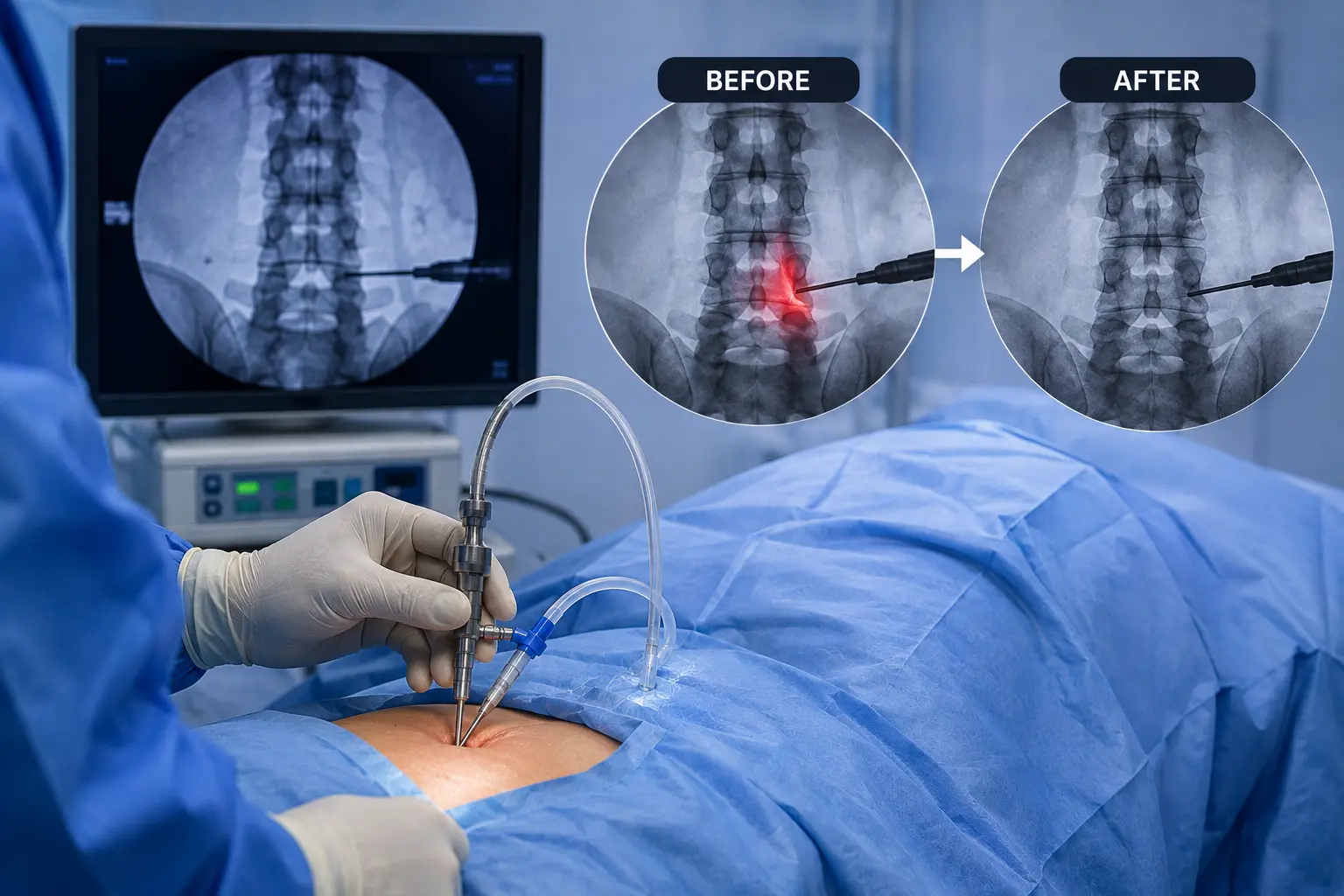
Transforaminal Approach
This approach uses the natural opening at the side of the spine (the foramen) to reach selected disc problems without disrupting the posterior spinal muscles. It is highly effective for addressing far-lateral disc herniations and foraminal stenosis. By bypassing the spinal canal entirely, this technique minimizes the risk of nerve injury and dramatically reduces post-operative recovery time.
- Planning: Based on symptoms, examination, and imaging
- Anaesthesia: Discussed individually before treatment
- Recovery: Varies with the procedure and patient factors
Interlaminar Approach
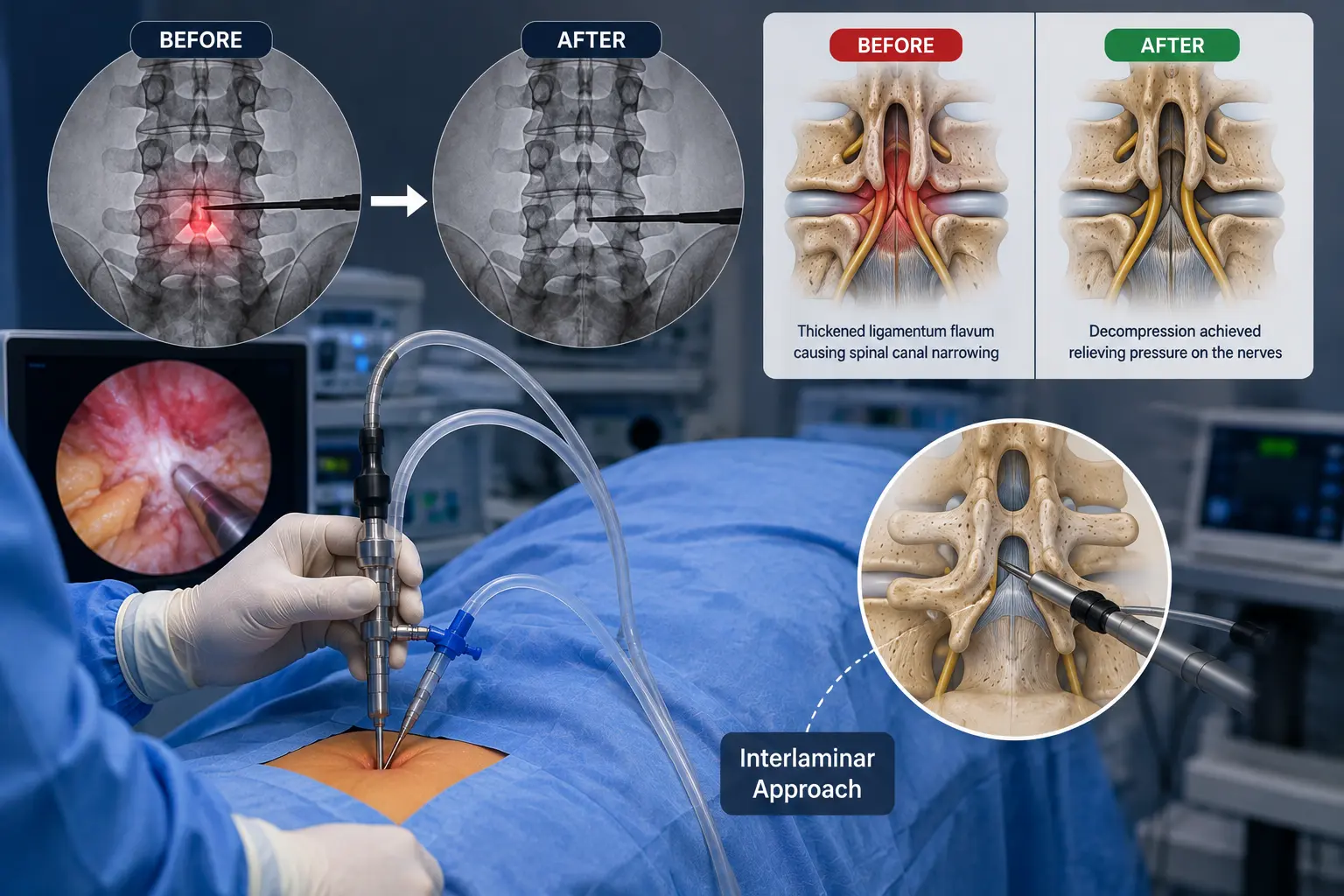
Often considered for selected lower-lumbar disc problems and spinal stenosis, this technique leverages the natural window between adjacent vertebrae. The endoscope is introduced from the back through the interlaminar space to address pressure on a nerve directly. It is particularly advantageous for central disc herniations or cases where the foramen is too narrow for a lateral approach, allowing for precise decompression while preserving spinal stability.
Unilateral Biportal Endoscopy (UBE)
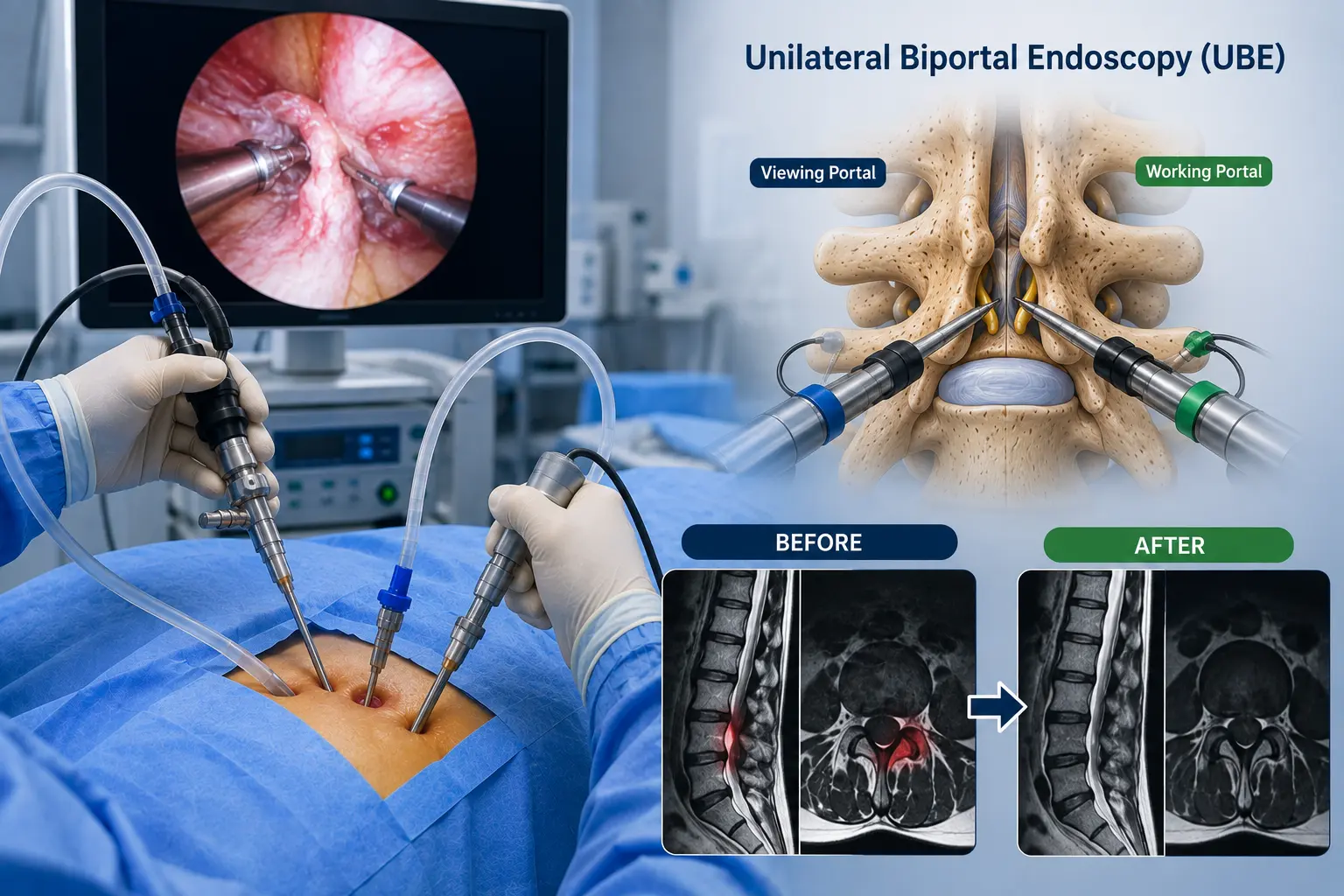
This technique uses two small access points: one dedicated exclusively to the high-definition camera and the other for specialized surgical instruments. By decoupling the visualization and working channels, UBE grants the surgeon unparalleled flexibility and a wider range of motion. It is especially beneficial for complex decompression procedures, including severe multi-level spinal stenosis, offering the benefits of endoscopic surgery with the versatility of traditional open techniques.
- Best For: Severe Central Canal Stenosis
- Advantage: Exceptional visualization and instrument agility
How treatment decisions are made
Endoscopic surgery is not the right choice for every spine problem. Dr. Tomar reviews your symptoms, neurological examination, scans, previous treatment, and the goals of care before discussing suitable options. These may include medication, rehabilitation, injections, endoscopic treatment, or conventional surgery.
Read the patient guide and FAQs →Potential Benefits
Book an Endoscopic Consultation
Consult Dr. Sachin Tomar in Meerut to see if you are a candidate for minimally invasive spine surgery.
Contact Brain & Spine Clinic